![[INTERVIEW] Greek-Korean describes her new beginnings in Korea](/uploads/articles/interview-greek-korean-describes-her-new-beginnings-in-korea-8791a1211c330b61fc31c87a.png)
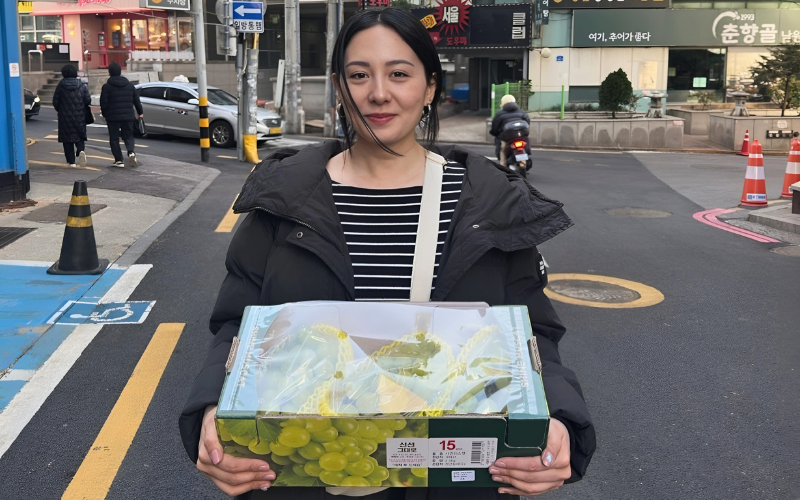
Born and raised in Greece, Maria Athanasopoulou set out on the new journey of her life in moving to Korea, the home of her heritage.
Back in Greece she was teaching Korean and she occupies a cherished spot in my heart as my very first Korean language instructor. Her dedication to teaching, coupled with her nuanced grasp of both Greek and Korean cultures, made my Korean language learning experience profoundly rewarding. Following the solid foundation she laid, I also embarked on learning about Korean culture with enthusiasm.
Aside from that, actively sharing her experience and observation of Korean culture on TikTok (@korean_maria), she has been followed by over 105,000 Greek viewers. This great following is proof of a growing interest in Korean culture among the Greeks, with Maria's vibrant and authentic representation of her life in Korea driving this interest.
I had the pleasure of interviewing her about her experiences and insights as she navigates her new life in Korea.
Below are excerpts from an email interview with her from July 24, 2024 to January 22, 2025.
How long have you been in Korea and what motivated you to move there?
I came to Korea at the end of August 2023, so it’s been almost one and a half year now. Time flies! I had been thinking of moving to Korea for many years, because I wanted to improve my Korean language skills and get to know my second homeland and my roots. Also, since the financial situation in Greece kept getting worse, I wanted to pursue career opportunities abroad. So, by choosing Korea, I combined both of my aspirations.
What were some of your first impressions when you arrived in Korea?
I have traveled to Korea many times before moving here, so I kind of knew what to expect. Of course, you experience a country differently when you are just traveling and differently when you are living there. What never ceases to pleasantly surprise me though, is how organized Korea is and how well the transport system works!
What are some of the biggest challenges you’ve faced while adapting and how have they contributed to your personal growth?
One of the biggest challenges I faced was the language barrier (since I’m not bilingual) and the cultural differences. You have to act in a certain way, which is much more discreet and indirect than the one we are used to in the west and you always have to be polite. Additionally, Koreans are pretty close-knit and hesitant to become friends with non-Koreans, so it’s kind of difficult to get closer to them. So, having to get over all these obstacles makes you stronger and more resilient. You are also more motivated to learn the language fast in order to improve the quality of your everyday life.
What do you enjoy most about living in Korea?
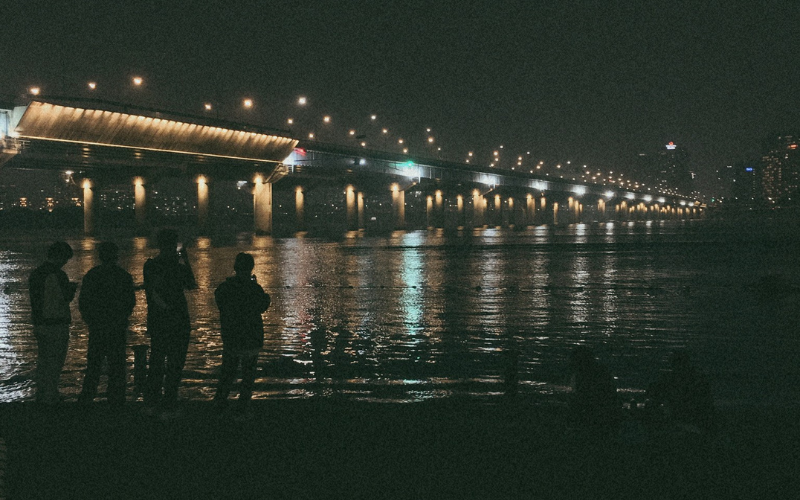
I mostly enjoy how easy and convenient everyday life is. For example, public transport is almost always on time, most of the toilets are clean (yes, even the public ones), you can find 24h convenience stores everywhere in case you need something and most importantly, I feel very safe. Seoul is one of the safest cities globally and I can tell why. I can walk home alone at any time and nobody will catcall or follow me. You can sit at a cafe/restaurant etc. and leave your bag and smartphone unattended and no one will steal them, it’s really amazing. There are also no pickpockets in the subway or bus. All these things make life so much easier and carefree!
What have been the most surprising aspects of Korean social norms, and how have you incorporated them into your daily life?
It’s very interesting to see how respect and the norms that come with it are such a vital part of Korean society. For example, when you greet someone older than you, it’s disrespectful to wave your hand, you have to bow. Or the fact that in public spaces, such as the public transport or the elevator, Koreans tend to be very quiet, so as to not disturb the other people. Personally, I like this feeling of mutual respect and I am also trying to integrate it into my everyday life. For example, I never wave to people anymore, I always bow. I am actually so used to it, that every time I return to Greece for holiday, I accidentally bow my head instead of waving and it’s so funny because nobody does that there!
What is a cultural similarity between Greece and Korea?
One very interesting similarity between Greece and Korea is the role of the family. In Greece, family is probably the most important institution and its members are very close to each other. Strange as it may sound, even though Korea is so different from Greece in terms of culture, when it comes to family, the situation is very similar. E.g. children live in their parent’s house until they get married and they have very close bonds.
Is there an inspiring story you’ve experienced in Korea that you frequently share?
It’s not exactly inspirational, but it is definitely encouraging and heartwarming. So, when I was attending my Korean language classes, I used to go and buy sweet snacks from a street vendor after the lesson was over. One day, I went there again, and he asked me my name, where I’m from etc. We naturally started talking and he said he knew Greece and Aristotle and Plato and even Onassis! It was so funny. And then he told me that if I ever had any questions or difficulties with my Korean, I could go find him and ask him for help. Every time that I remember this, I feel so thankful towards him!
What advice would you give to anyone considering moving to Korea?
I believe that if someone wants to move to Korea, they have to think about a lot of things. First and foremost, they have to speak at least a bit of Korean, otherwise it’s going to be very difficult to find a job and build a life there. Second, it is good to have put some money aside before coming here, so that you can have a safety net, in case things don’t go as planned and you need financial support etc. Third, they should be prepared to experience culture shock and accept rules or norms that they are not familiar with.
Looking back on your journey, what are some of the most rewarding aspects of living in Korea, and what makes you excited about the future?
The most rewarding thing so far is the fact that I started to realize what I am capable of and to build my confidence. Living abroad makes you face challenges that you hadn’t thought about before and that makes you stronger. So, I like that the life here gives me the opportunity to get closer to myself. Korea is also a country that rewards hard work, so Ι feel like my effort is paying off. In Greece, I kind of felt like all the effort I put in was not enough and I was not satisfied with the quality of life. Which is a shame, because I love Greece very much and it takes a toll on me that I live so far away now. I tend to be a rather pessimistic person, so I am not exactly excited about the future, but I hope it will continue to smile at me and that I will get to live beautiful and fulfilling experiences.