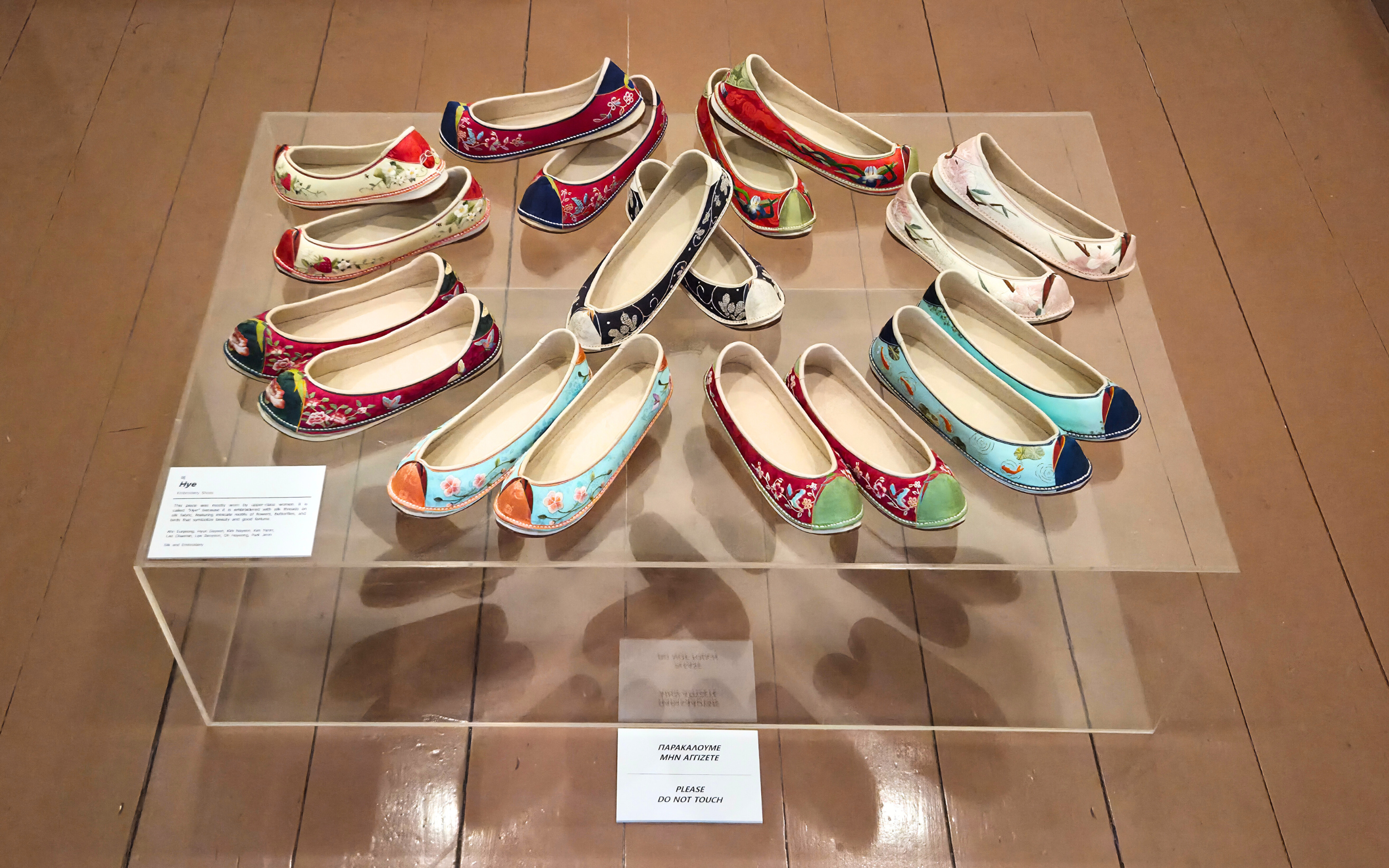
“The Art of Korean Traditional Clothing & Textiles” opened on Jan. 31 at the Bath House of the Winds, part of the Museum of Modern Greek Culture in central Athens, Greece. It is a collaborative exhibition by the Korea National University of Heritage (KNUH) and the University of West Attica (UNIWA), and it runs through Feb. 4. The exhibition showcases Korea’s textile and dress culture of the Joseon period (1392-1910), presenting hanbok not only as clothing but also as a visual language expressing social status and ritual meaning.
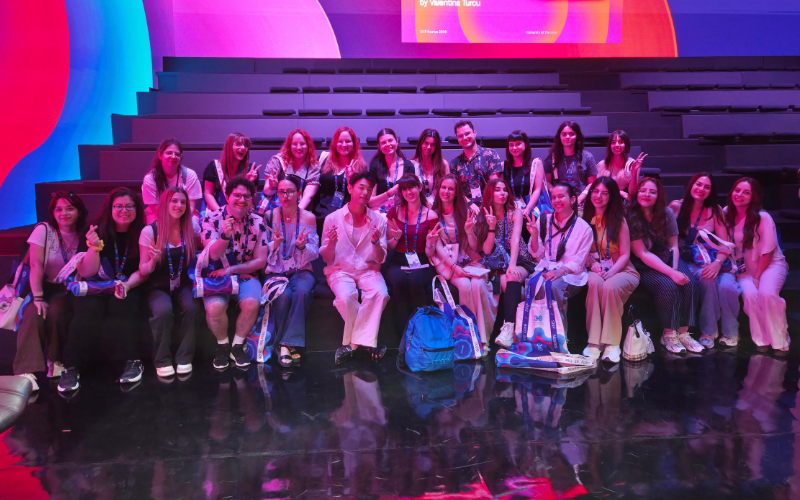
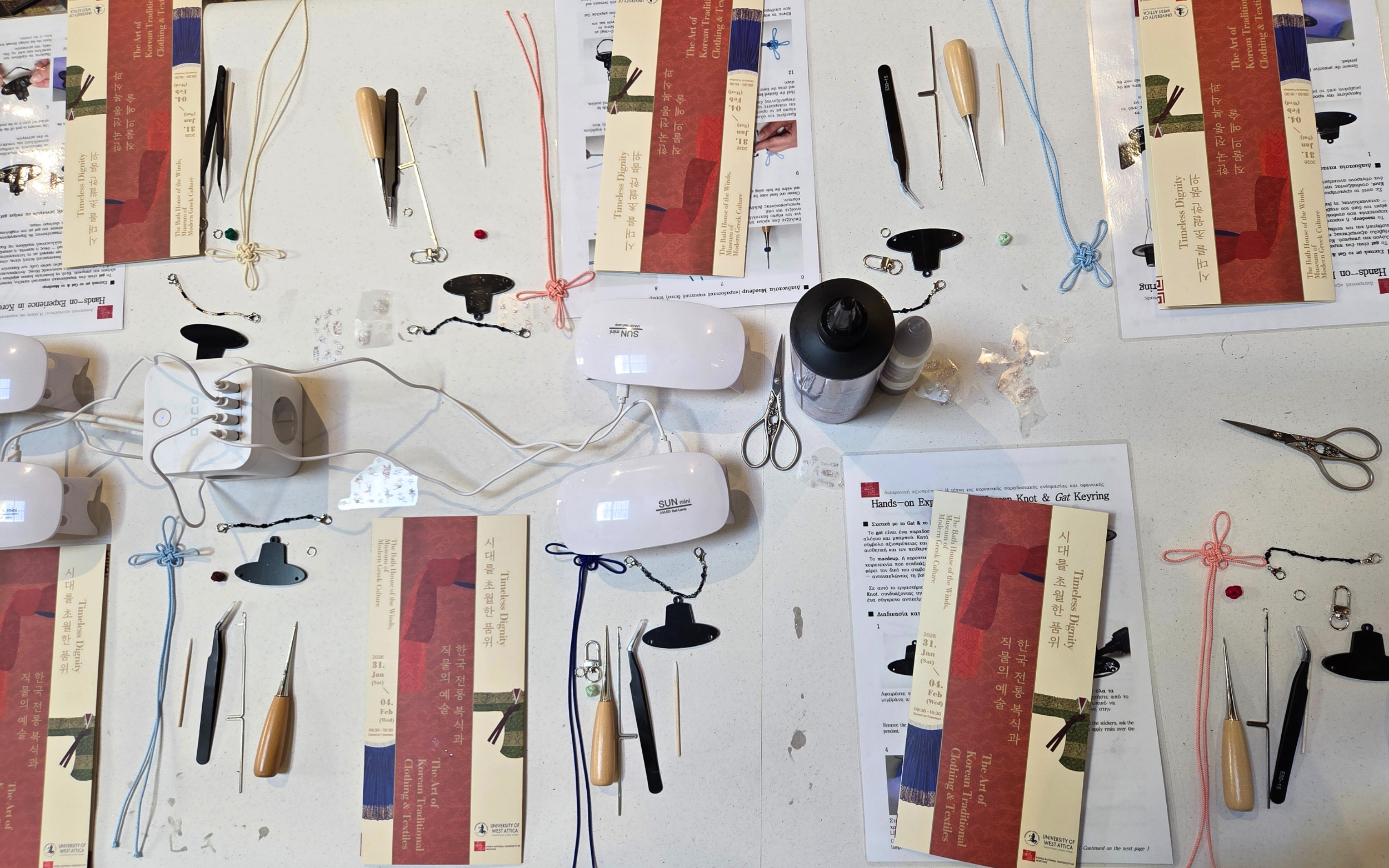
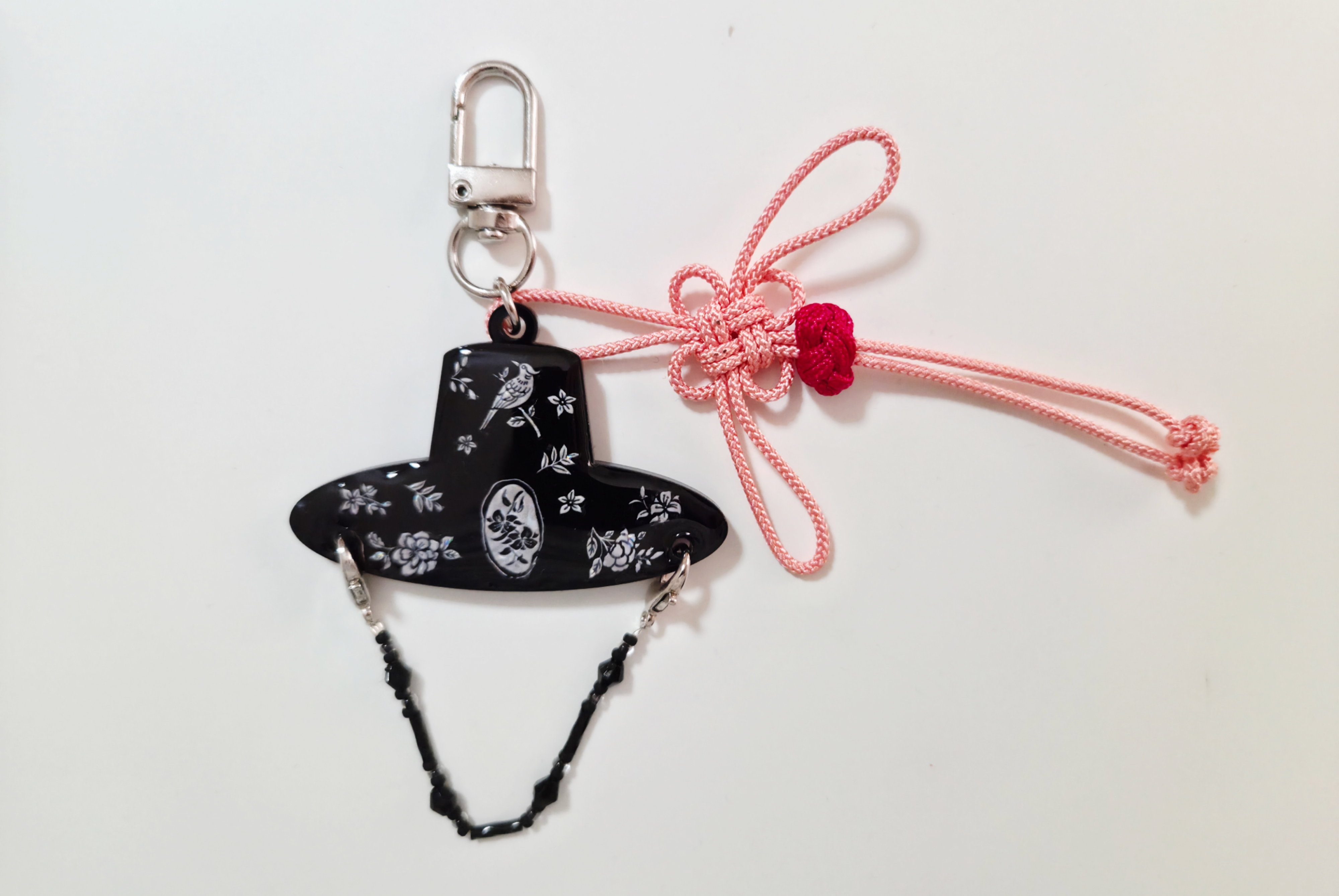
Attendees who signed up in advance had the chance to participate in a hands-on workshop led by faculty members and students from KNUH before their guided tour of the exhibits. After watching a short presentation video introducing the university’s specialized programs in cultural heritage, participants were invited to create gat (갓) key rings using traditional Korean knotting techniques known as maedeup (매듭).
Following the workshop, a Korean professor living in Greece guided visitors through the exhibition space, explaining each piece and its historical background. All the works on display were created by students of the Department of Traditional Arts and Crafts at the KNUH, reflecting academic training and creative interpretation.
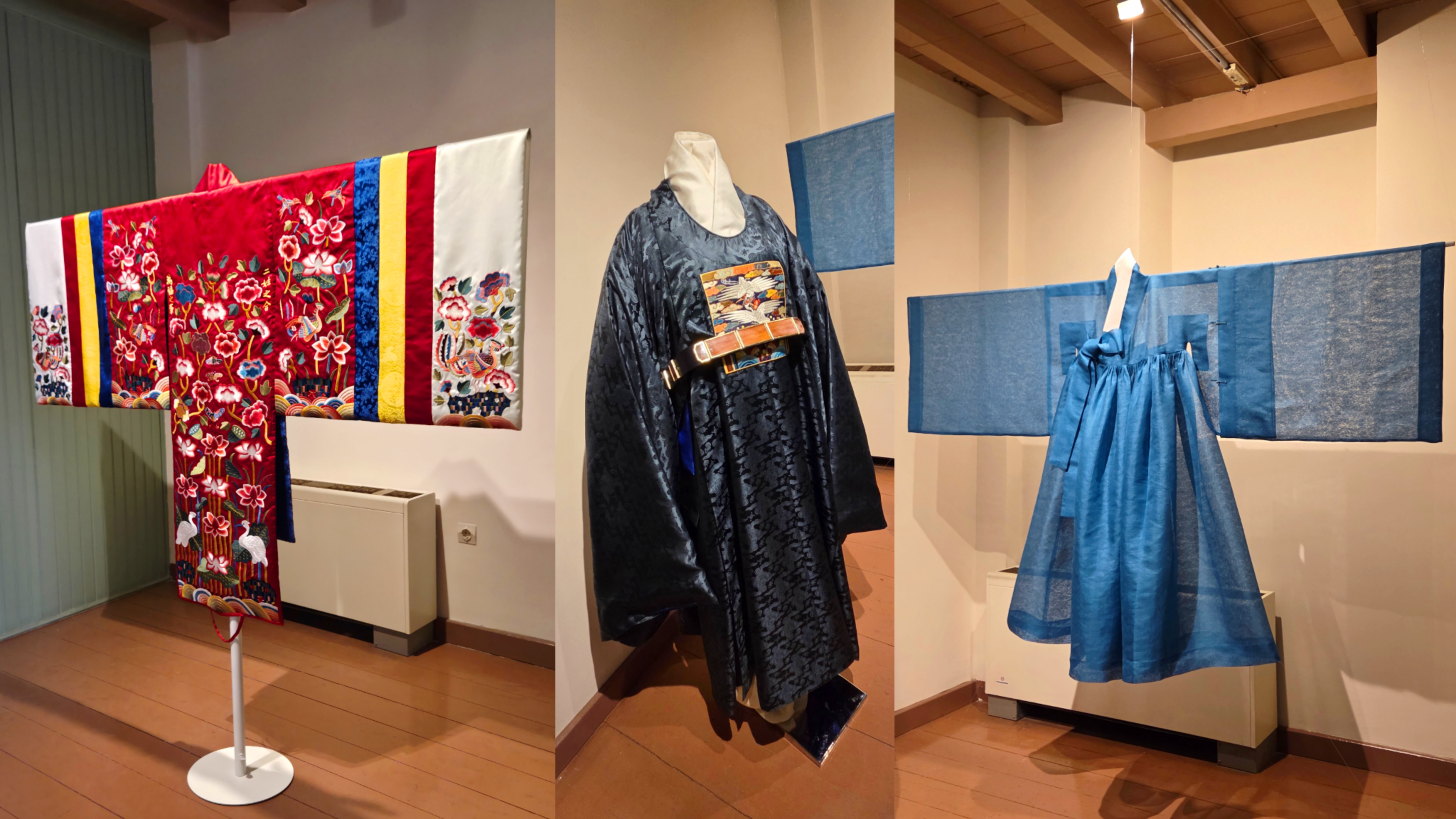
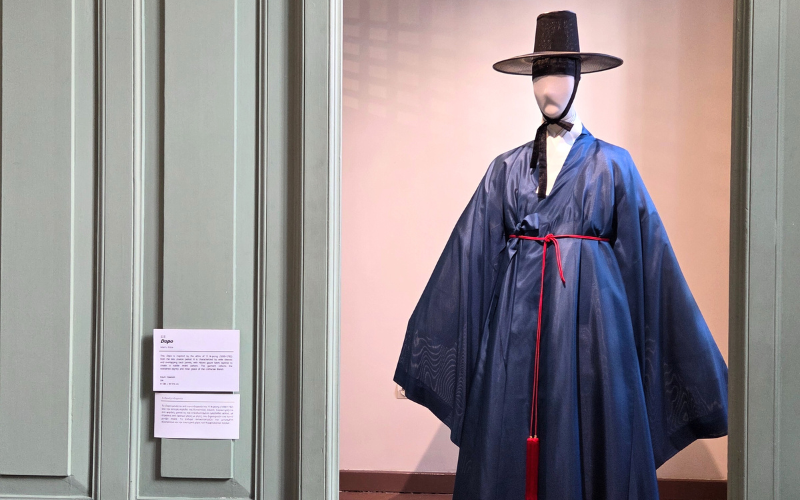
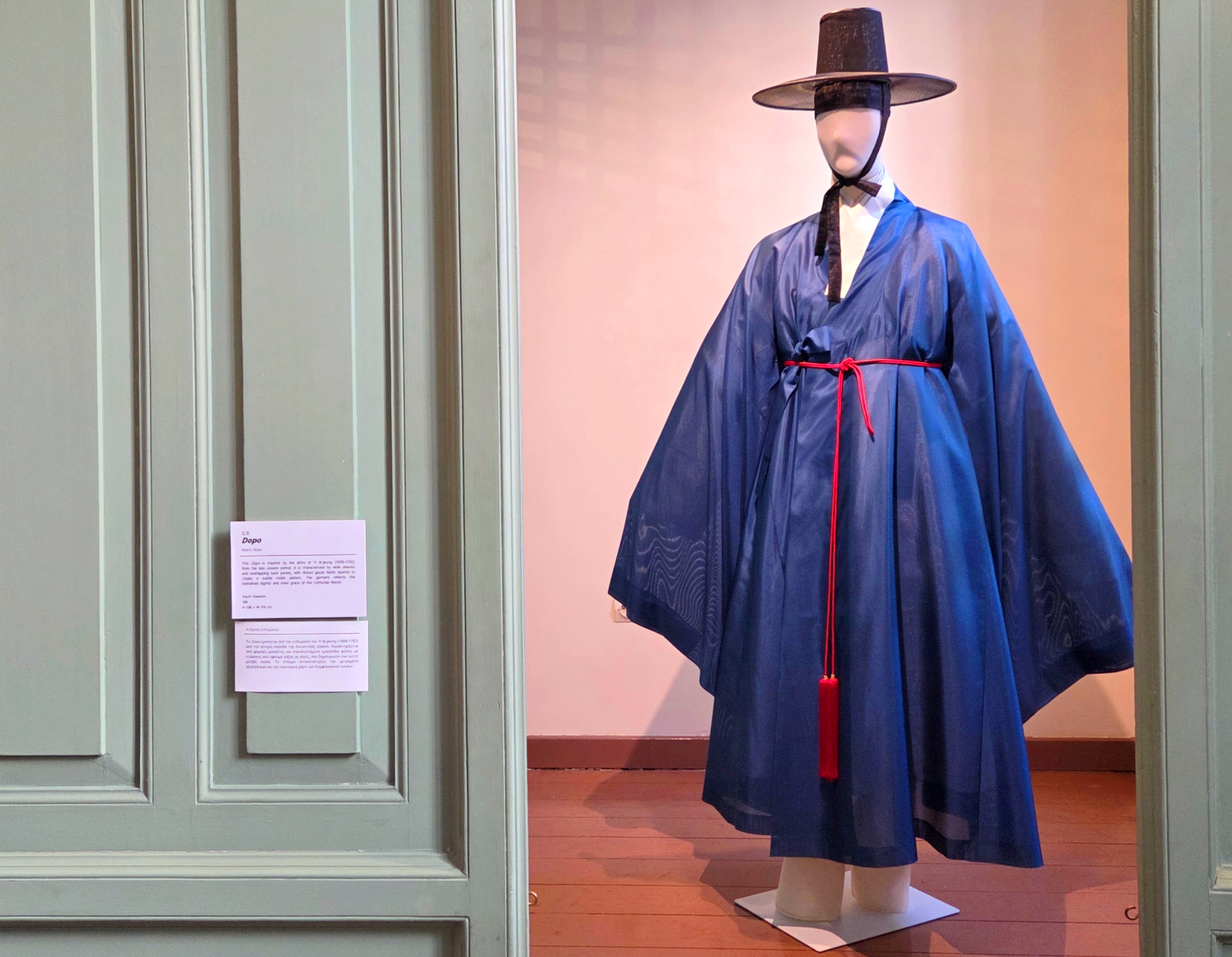
The exhibition was arranged across two floors. On the ground floor, men’s attire was displayed, such as the Dopo (도포), a scholar’s robe inspired by the late Joseon literati Yi Ik-Jeong (1699-1782), characterized by wide sleeves and layered gauze fabric that creates a subtle moiré pattern. Nearby, more elaborately reproduced garments were displayed, including the Dallyeong (단령), Cheolrik (철릭) and the richly embroidered Hwarot (활옷), a royal wedding robe worn by princesses, royal concubines, and other women of the Joseon court.
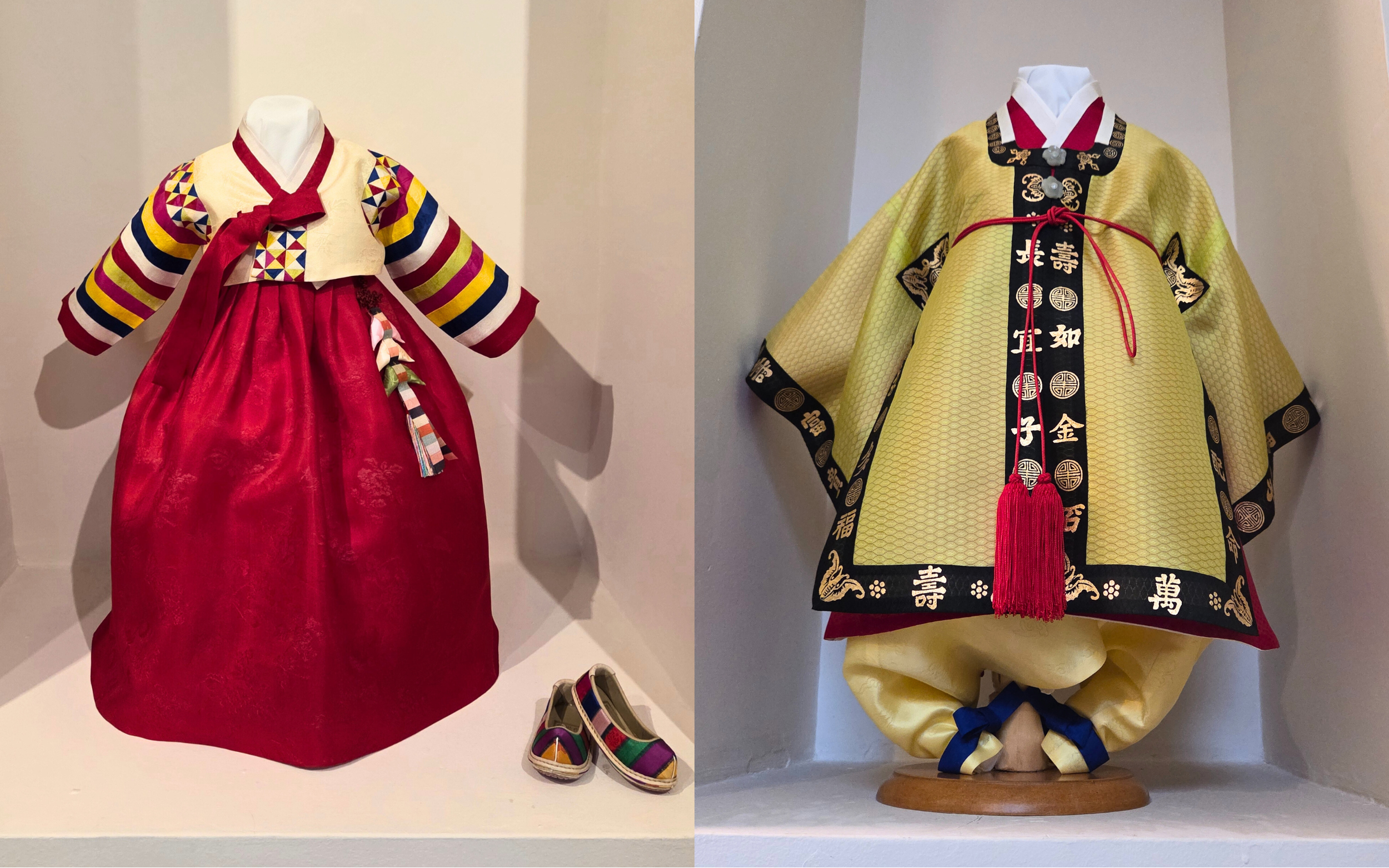
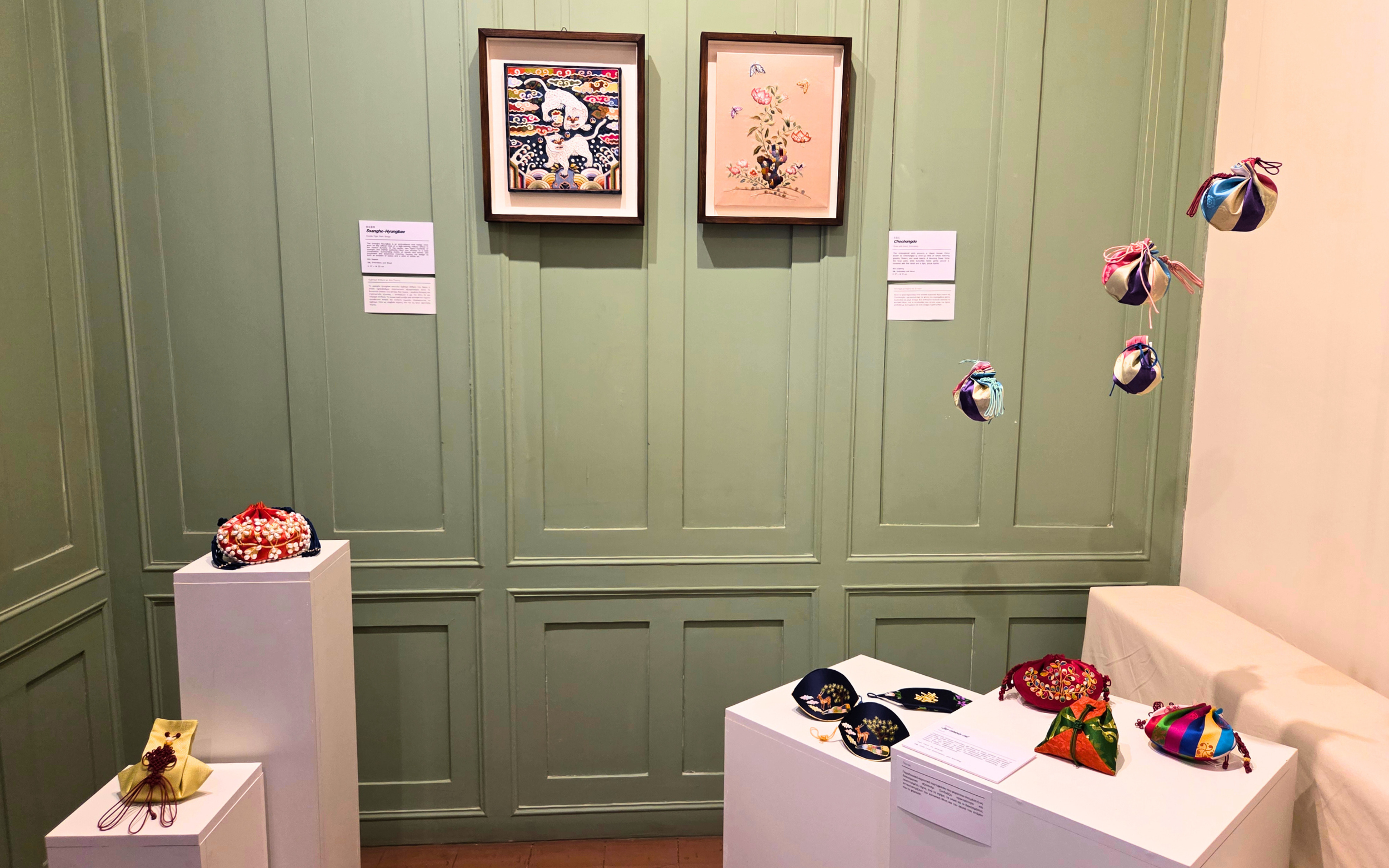
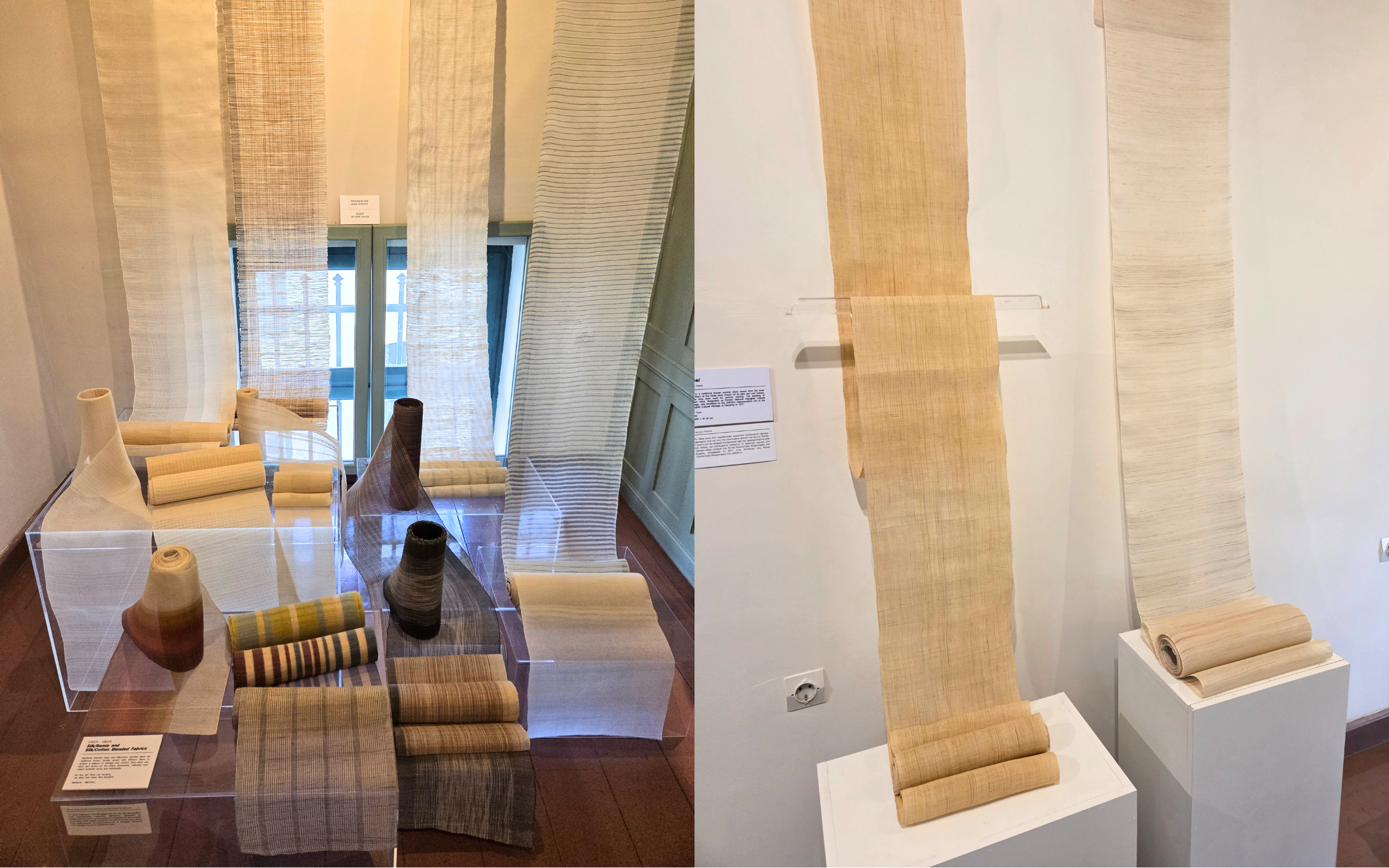
Upstairs, the focus expanded to ceremonial children’s clothing, textile art, and accessories. Visitors could find Sagyusam and Chang-ui (사규삼과 창의), ceremonial robes for boys used for first birthdays and coming-of-age ceremonies, embroidered rank badges known as Ssangho Hyungbae (쌍호흉배), Norigae (노리개) ornaments that was hung from the waist or ribbons of clothing symbolizing good fortune, and Hansan Mosi (한산모시), a ramie fabric used for summer clothing recognized by UNESCO as Intangible Cultural Heritage.
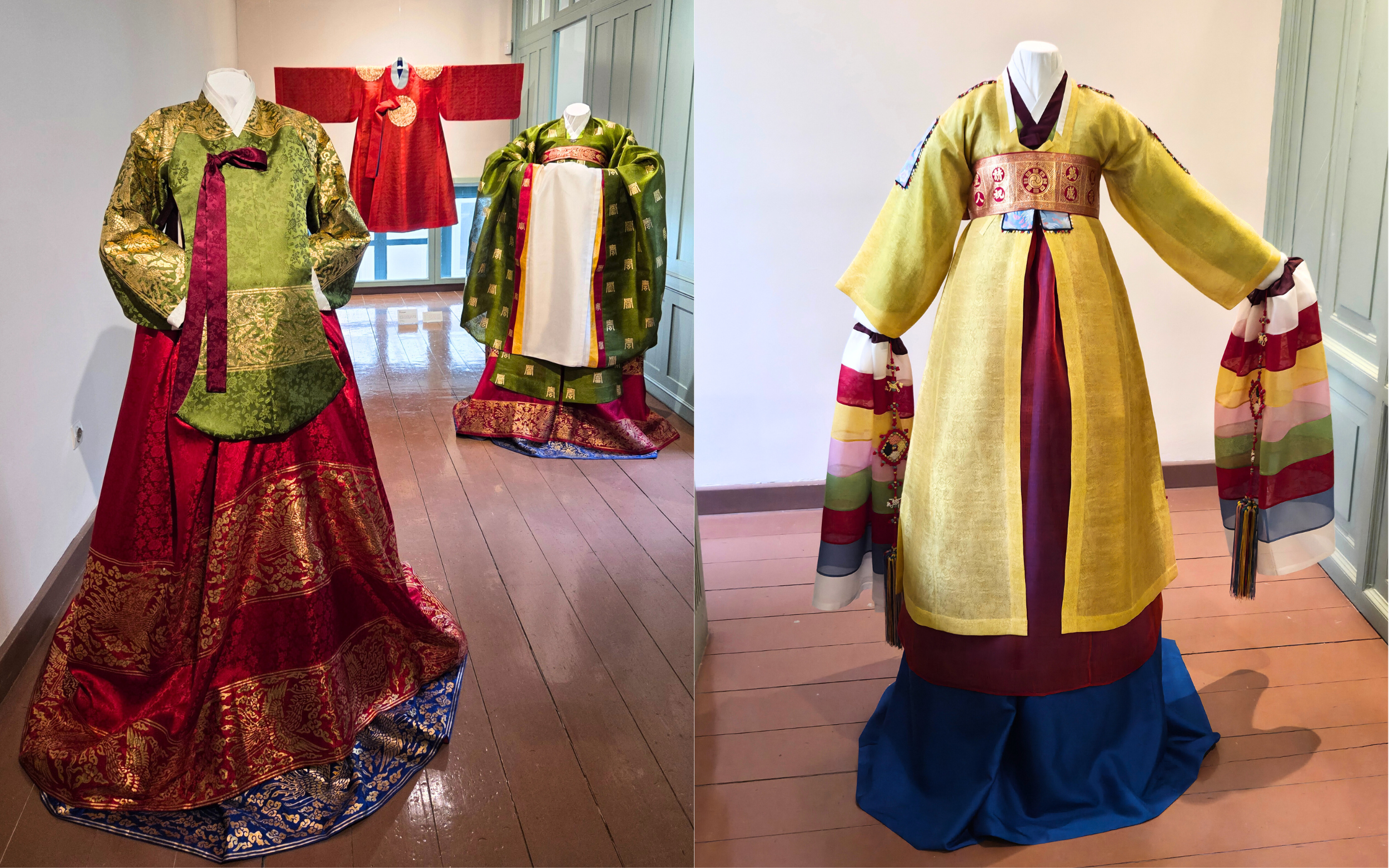
According to the exhibition text, “far more than functional clothing, hanbok served as a powerful visual language, communicating the wearer’s status and dignity as well as the ritual meanings attached to key moments of life”. By juxtaposing ceremonial garments with everyday attire, the exhibition illustrated the continuity of Korea’s textile heritage into the present.
The exhibition also marks a significant academic milestone. KNUH and UNIWA have signed a Memorandum of Understanding to strengthen cooperation in education and research in the fields of cultural heritage and the arts. In a message included in the exhibition materials, KNUH President Kyung-Hwan Kang noted that the collaboration is especially meaningful as Korea and Greece celebrate the 65th anniversary of diplomatic relations, emphasizing the strong commitment of both countries to preserving and passing on tradition.